As a rule of thumb, texting someone new means keeping things light and involves back-and-forth dialogue about shared interests, finding common ground, and learning about who they are, says Ray. So much of what we believe is based on some authority figure telling us that something is true. OK, sometimes it's personal, but most of the time, it's not.

TheEncyclopædia Britannicadefines slang as "unconventional words or phrases that express either something new or something old in a new way. It is flippant, irreverent, indecorous; it may be indecent or obscene." Slightly confusing, right? So, that's why we simply define slang as very informal language or specific words used by a group of people.

You can also come across it in SMS or social media. However, you don't use slang in formal written work. A time-out can be especially useful when a specific rule is broken. With children who are at least 3 years old, you can try letting their children lead their own time-out instead of setting a timer. Others don't get used because people move on to a new slang word. Sometimes, slang words are so popular that they are absorbed into the common language.

What to say instead of what's going on So, that's how language grows and evolves over time. But how can you make sure you understand what's going on once you go out into the world and begin to practice your English? Often as we begin to practice our new-found language skills, we realize that the way words sound in conversation can be very different from how we learned originally. Accents, speed, slang and idiomatic variances can mean we feel very lost – almost as if the other person isn't speaking English at all. While both the coach and the play stealer start from something that already exists, they generally have different results. These two people look the same to most of us on the sidelines or watching the game on the TV.

Indeed, they look the same most of the time, but when something goes wrong, the difference shows. Both the coach and the play stealer call successful plays and unsuccessful plays. Only the coach, however, can determine why a play was successful or unsuccessful and figure out how to adjust it. The coach, unlike the play stealer, understands what the play was designed to accomplish and where it went wrong, so he can easily course-correct.
He doesn't understand the difference between something that didn't work and something that played into the other team's strengths. These are some other common ways of asking "how are you? " They can be used to casually greet anyone, but most often they're used to greet someone you already know. Again, if small talk feels appropriate, you could also briefly share any interesting news about your life, and then ask the person "what about you?

Using the right customer service phrases in even the most straightforward support interactions can transform a good customer experience into a great one. On the other hand, using the wrong phrases can make an otherwise exceptional support experience feel impersonal. Other times, my silence is merely a way for me to create the space I need to process my feelings. But again, the other person is not a mind reader, so neither reason is truly a healthy way to deal with the situation. A lot of professional investors read Farnam Street. When I meet these people and ask how they consume information, they usually fall into one of two categories.

The differences between the two apply to all of us. The first type of investor says there is too much information to consume. They spend their days reading every press release, article, and blogger commenting on a position they hold. The second type of investor realizes that reading everything is unsustainable and stressful and makes them prone to overvaluing information they've spent a great amount of time consuming.

These investors, instead, seek to understand the variables that will affect their investments. While there might be hundreds, there are usually three to five variables that will really move the needle. The investors don't have to read everything; they just pay attention to these variables. There's nothing inherently wrong with these phrases. And doing it anyway is a signal that you're talking one language and the people you want to vote for you are speaking another language. This stuff is harmless in one sense, but in another sense it's not.
So, try to make sure you use slang correctly, like a native speaker. When you use it out of context or inappropriately, it sounds strange and could show that you don't understand the language. Now let's have a look at the 100 most common Aussie slang words and phrases. No phrase is a set of magic words that will automatically improve your customer experience. However, understanding which phrases create warm feelings and which come across as impersonal is an important part of thoughtfully responding to customers.

James Pennebaker has done 40 years of research into the links between writing and emotional processing. His experiments revealed that people who write about emotionally charged episodes experience a marked increase in their physical and mental well-being. We're apt to leap to basic descriptors like "angry" or "stressed" even when our feelings are far less extreme. I had a client Ed who was struggling in his marriage; he frequently described his wife as "angry" and got angry frequently in return.
But as the vocabulary chart suggests, every emotion comes in a variety of flavors. When we talked about other words for his wife's emotions, Ed saw that there were times that she was perhaps just annoyed or impatient. This insight transformed their relationship because he could suddenly see that she wasn't just angry all the time.

This meant he could actually respond to her specific emotion and concern without getting angry himself. Similarly, it matters in your own self-assessment whether you are angry or just grumpy, mournful or just dismayed, elated or just pleased. It's been shown that when people don't acknowledge and address their emotions, they display lower wellbeing and more physical symptoms of stress, like headaches. On the flip side, having the right vocabulary allows us to to see the real issue at hand–to take a messy experience, understand it more clearly, and build a roadmap to address the problem. One emerging – and increasingly supported – theory is that facial expressions don't reflect our feelings. Instead of reliable readouts of our emotional states, they show our intentions and social goals.

It's usually easy to talk with elementary students about what's going on in class and the latest news at school. You probably know what books your child is reading and are familiar with the math being worked on. But parents can get busy and forget to ask the simple questions, which can have an effect on children's success at school. Kids also need the right amount of sleep to be alert and ready to learn all day. Most school-age kids need 10 to 12 hours of sleep a night. Bedtime difficulties can arise at this age for a variety of reasons.

Homework, sports, after-school activities, TVs, computers, and video games, as well as hectic family schedules, can contribute to kids not getting enough sleep. Motion sickness — a sick feeling that some people get from riding in cars, boats, or airplanes — can sometimes be helped by eating a small snack before you start moving. If you know that trips to grandma's house make you feel yucky, ask your parents for some crackers or a piece of fruit before you hop into the car. Opening the car window a bit and letting in some fresh air can also help prevent that pukey feeling. If this doesn't work, talk with your mom or dad about medicines that might help motion sickness. Growing up in a bilingual or multilingual family doesn't affect how early or quickly children learn to use language.

Sometimes multilingual or bilingual children mix their languages for a while, but this stops once they understand that they're using more than one language. A few years ago, Apple's training manual of "forbidden customer service words" was leaked to Gizmodo. Within the manual, Apple's legal team suggests alternatives to common customer service phrases that might rub customers the wrong way or lead to a legal issue. Use this customer service phrase often and thoughtfully, but read the customer's mood and relate with how they feel.

Once you understand what you are feeling, then you can better address and learn from those more accurately described emotions. Here's an exercise you can use to reflect through writing. Being heard and seen is one of our basic needs as humans. Acknowledging your partner's feelings not only validates their experience, it creates space for a larger conversation.

You can avoid the silent treatment by compassionately acknowledging what you're feeling. Avoid accusations or hostile language and try not to overthink it. I know for me, a simple "I know I've been quiet lately" or "Hey, I noticed you're not responding to me" opens the door to healthier communication.
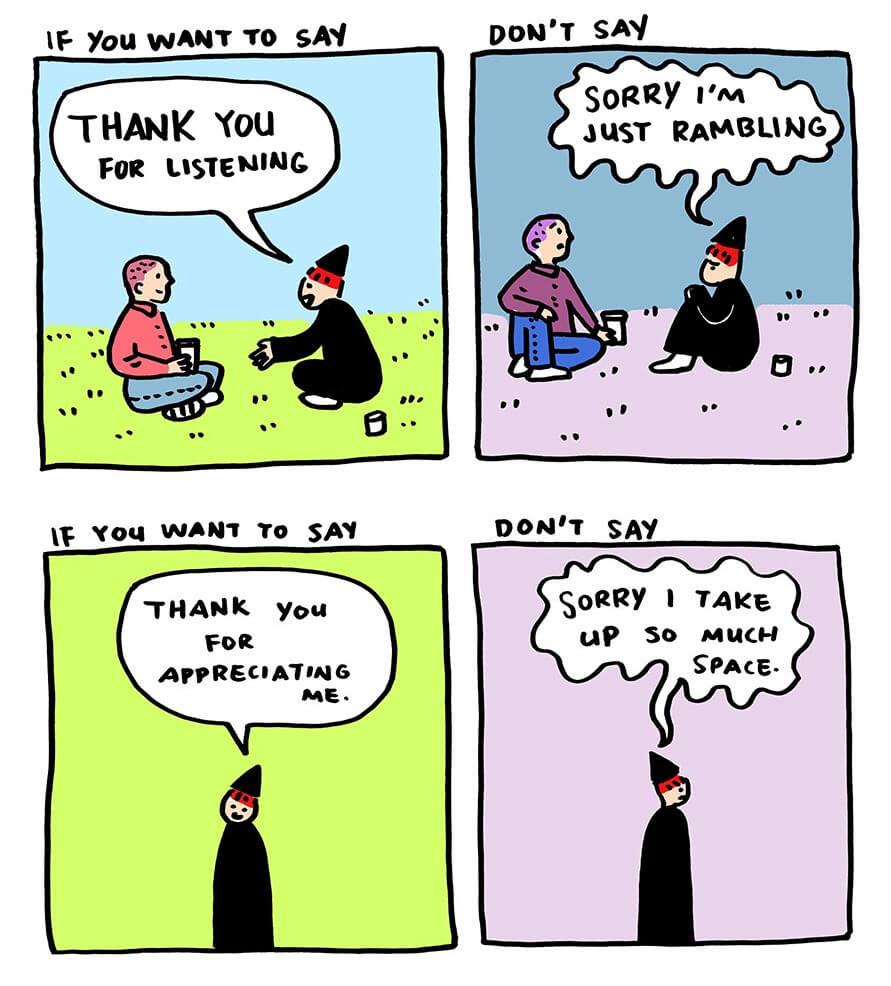
We can all agree that there are definitely things you shouldn't say to your partner during a heated argument. But have you ever given your partner the cold shoulder instead? Red flag.The silent treatment might seem like a convenient way to opt out of a conversation that is bothering youbut it's also super unhealthy. What most people don't know, is that the cold shoulder is a subtle form of manipulation.

The silent treatment is used to punish and regain control of a person. It may feel good to ignore your partner when you feel slighted but, it keeps you from finding real solutions to the problems that are bugging you the most. Teens have mixed views on whether social media has had a positive or negative effect on their generation. About three-in-ten (31%) say the effect on people their own age has been mostly positive, 24% say it's been mostly negative, and 45% say it's been neither positive nor negative. Lots of smart people are going to read it, and hopefully they can figure out that which I can't. But if you're asking me, I think it's because large parts of the country view us as an urban, coastal, arrogant party, and a lot gets passed through that filter.

I don't give a damn what anyone thinks about it — it's a real phenomenon, and it's damaging to the party brand. As a non-native English speaker, when you use slang correctly , it can make you sound more natural in your speech. Also, it can show your understanding of English in a social context. For example, using slang with your mates is good. But if the conversation is more formal, you probably want to avoid slang words and phrases.

These early years of schooling are an important time for parents to be informed and supportive about their child's education and to set the stage for children to develop and grow as young learners. Lack of sleep can cause irritable or hyperactive behavior and might make it hard for kids to pay attention in class. It's important to have a consistent bedtime routine, especially on school nights. Be sure to leave enough time before bed to allow your child to unwind before lights out and limit stimulating diversions like TV, video games, and Internet access.

If you notice any of the following signs in your child, or you're worried about your child's language development, it's a very good idea to see your child and family health nurse, GP or paediatrician. Your child will talk about things that have happened during the day. With your help, they might be able to put together a simple story – for example, your toddler might say 'I go shop'. You might respond, 'And what did you do at the shop? By age three, they might be able to tell a simple 'made-up' story based on experiences they've had, but they'll probably leave out a lot of detail.

Continue to show plenty of affection and attention. Young people are more likely to make healthy choices if they stay connected with family members. Preschool-age children are still trying to understand how and why things work and what effect their actions have.

As they learn appropriate behavior, expect them to continue testing the limits of parents and siblings. As you spend time practicing mindfulness, you'll probably find yourself feeling kinder, calmer, and more patient. These shifts in your experience are likely to generate changes in other parts of your life as well. Slang greetings are extremely informal, and should only be used with people that you know very well, and feel very comfortable with.

Keep in mind that a lot of slang is regional, and using Australian slang, for example, in America can sound quite strange. You'll need to learn the local slang wherever you are, but these common examples will help you get started. These are some other informal ways of asking "how are you?

" which are typically used to casually greet someone you have met before. Or, if it feels right to make small talk, you could also briefly describe anything new or interesting that's going on in your life, before asking "what about you? " If you're trying to be particularly polite, stick with "how are you? " but otherwise, you can use these expressions to greet almost anyone. The word "going" is usually shortened, so it sounds more like "go-in". You can answer with "it's going well" or "I'm doing well" depending on the question.

Although it's not grammatically correct, most people just answer "good" – and you can too. " you can also follow your answer by asking "and you? At first glance, this might seem like a super helpful customer service phrase that you should definitely use. But if it gets pulled out at the wrong time, it can infuriate customers who don't feel like they got any help in the first place. For an outspoken person like myself, it was initially hard for me to understand why some people might just slink away without bringing up additional problems.

Maybe they don't want to be a burden, or maybe they think you don't care. Whatever the reason, you need to let them know that you'd be happy to hear them out. Today we're going to look at some of the most common alternatives that you can use to express yourself more clearly, and liven up your English language conversations. Keep in mind that these communication strategies may not work on your partner if they are already aware that the silent treatment is an unhealthy behavior. We all do unhealthy things sometimes and it doesn't make you or your partner a monster.

If you've had a conversation about the silent treatment with your partner and the behavior continues, it may be time to consider leaving the relationship–because we all deserve healthy relationships. Bae, I care about you and I really want this relationship to work, that's why it hurts when you choose to ignore me instead of telling me what's bothering you. When you ignore me because you're upset, it makes me feel like you don't care.